
1. Introduction: The Architecture of the Misleading Statement
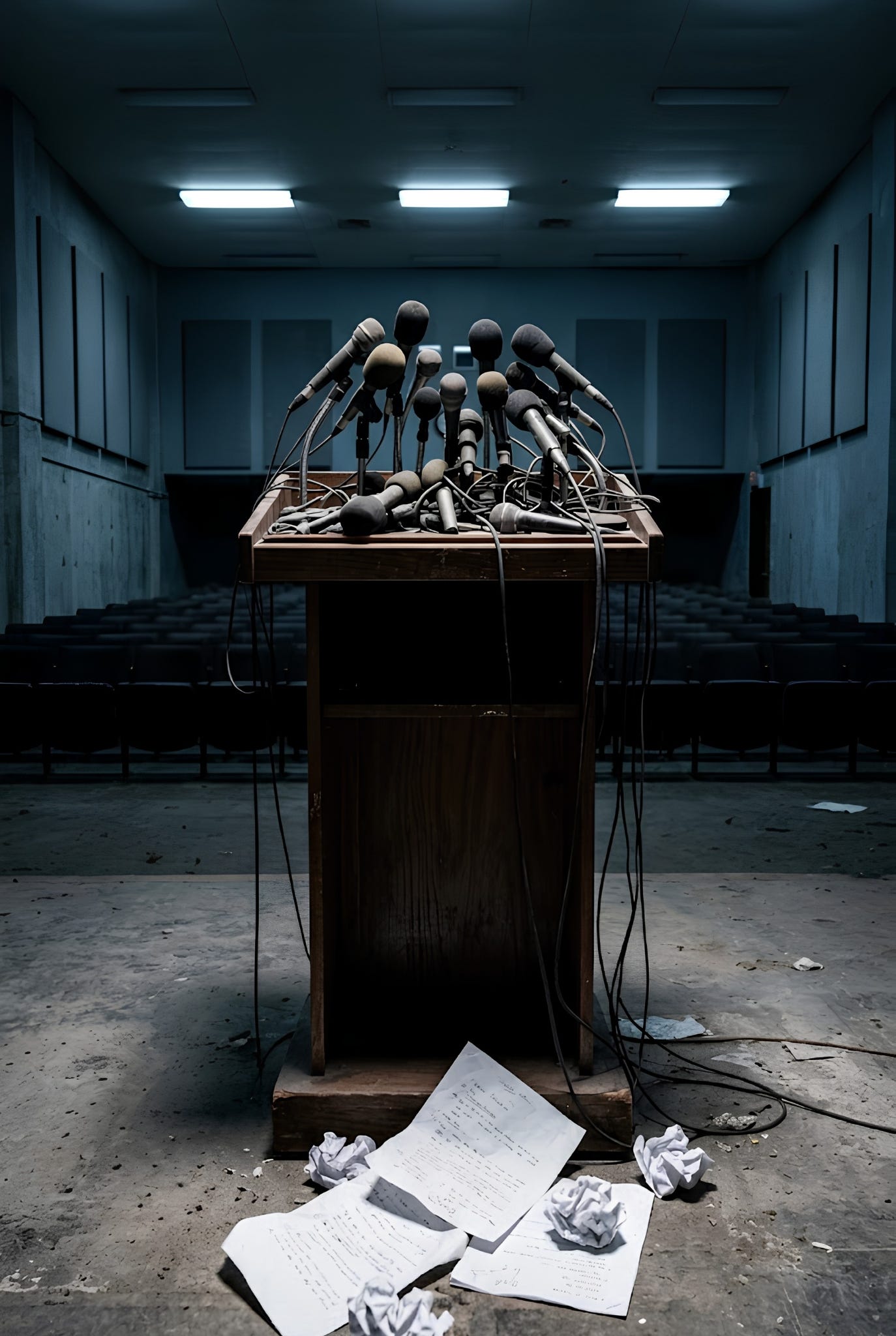
In the British parliamentary system, the Despatch Box serves as the physical and symbolic site where the executive is held to account by the legislature. Between 1970 and 2026, the strategic importance of ministerial truthfulness has shifted from a matter of individual honor to a complex struggle over “information asymmetry.” During the premiership of James Callaghan (1976–1979), accountability functioned largely through an “honor-based” system where ministerial declarations were accepted at face value, a model that has since been superseded by the data-driven obfuscations and vetting crises of the 2020s.
Central to this analysis is the baseline established by the 1996 Scott Inquiry, which codified the “inadequate and misleading reply” [3], [4]. This terminology defines statements that may lack “duplicitous intent” yet fail to provide Parliament with a full and accurate picture of government activity [3], [4]. The history of the modern premiership is best understood through specific instances where public declarations met private facts.
2. The 1990s: Secret Policy and the Arms to Iraq Affair
The “Arms to Iraq” scandal in the mid-1990s led to a three-year inquiry and the collapse of the 1992 Matrix-Churchill trial. The case exposed a culture of secrecy where ministers and civil servants managed the flow of information to Parliament to hide a shift in defense export policy.
While Prime Minister John Major claimed he had not been briefed on changes to the export of defense equipment to Iraq, the subsequent inquiry by Sir Richard Scott found evidence to the contrary [1]. Scott’s report observed that Major “knew that the government had decided to change the guidelines” [2]. This stood in contrast to the conduct of William Waldegrave, who held the office of Minister of State at the Foreign Office. Waldegrave approved the relaxation of these guidelines while assuring MPs that policy remained unchanged. Scott noted that Waldegrave “strenuously and consistently” maintained this belief in the face of a “volume of overwhelming evidence to the contrary,” resulting in “inadequate and misleading replies to parliament” [3], [4].
The human impact of this informational failure was documented through the legal system:
• Wrongful Prosecutions: Paul Henderson, managing director of Matrix-Churchill, and two colleagues were prosecuted for exporting machine tools with military dual-use capability [5].
• Trial Collapse: The 1992 trial failed after Alan Clark, who had occupied the post of Minister of State for Trade and Defence Procurement, admitted he had encouraged exporters to emphasize civil use on license applications to bypass guidelines the government claimed were still in place [5].
• Quashed Convictions: Following the inquiry, convictions against Henderson and others linked to similar companies were quashed because they had been “wrongly accused” due to covert government encouragement [5].
3. The 2000s: The September Dossier and the Intelligence Trap
In September 2002, the publication of the “September Dossier” functioned as the primary strategic tool for mobilizing parliamentary support for the invasion of Iraq. The document’s foreword, which bore the signature of Tony Blair, included the claim that some of Iraq’s weapons of mass destruction (WMD) could be ready for use within 45 minutes of an order [3]. While media headlines created a public impression of an immediate threat to the UK, later testimony from MI6 head Richard Dearlove revealed the intelligence actually referred only to battlefield weapons, not long-range missiles [3], [17].
Veracity was further strained by the claim that Iraq sought uranium from Africa, a point Tony Blair asserted was established “beyond doubt” [13]. However, the Foreign Affairs Select Committee later concluded that this claim should have been “qualified to reflect the uncertainty” of the intelligence [13].
The Butler Review and a 2003 memo from John Scarlett, chair of the Joint Intelligence Committee, highlighted a deliberate effort to manage perception. Scarlett’s memo noted the “benefit of obscuring the fact” that Iraq’s WMD status was not exceptional [7], [14]. Major General Michael Laurie later told the Iraq Inquiry that the “purpose of the dossier was precisely to make a case for war” rather than providing an objective intelligence assessment [6].
4. 2010–2022: Broken Pledges and the “Typical” Household
The “intelligence trap” of the 2000s forced a strategic pivot toward domestic guarantees where the executive maintained a monopoly on delivery data. Misleading ministerial statements shifted from foreign intelligence to domestic service delivery and economic guarantees.
In 2010, David Cameron pledged there would be “no top-down reorganisation of the NHS” [19]. Despite this, the coalition government implemented the Lansley reforms, described by the King’s Fund as a “damaging and distracting” reorganisation and a “strategic error” [19]. The think tank concluded that the reforms were structurally incomprehensible and caused a leadership vacuum [19].
Economic guarantees also became a site of linguistic ambiguity. In September 2022, Liz Truss claimed that “no household” would pay more than £2,500 on energy bills under the Energy Price Guarantee [12]. This statement obscured the mechanism of the price cap, which limited unit rates rather than total bills.
• Detached Houses: Typical bills for larger homes were estimated at £3,300 [12].
• Semi-detached Houses: Typical bills reached £2,650 [12].
• Typical Usage: The £2,500 figure applied only to “typical” usage; households with high consumption were not protected from paying more [12].
A very deep dive into dishonesty in Westminster
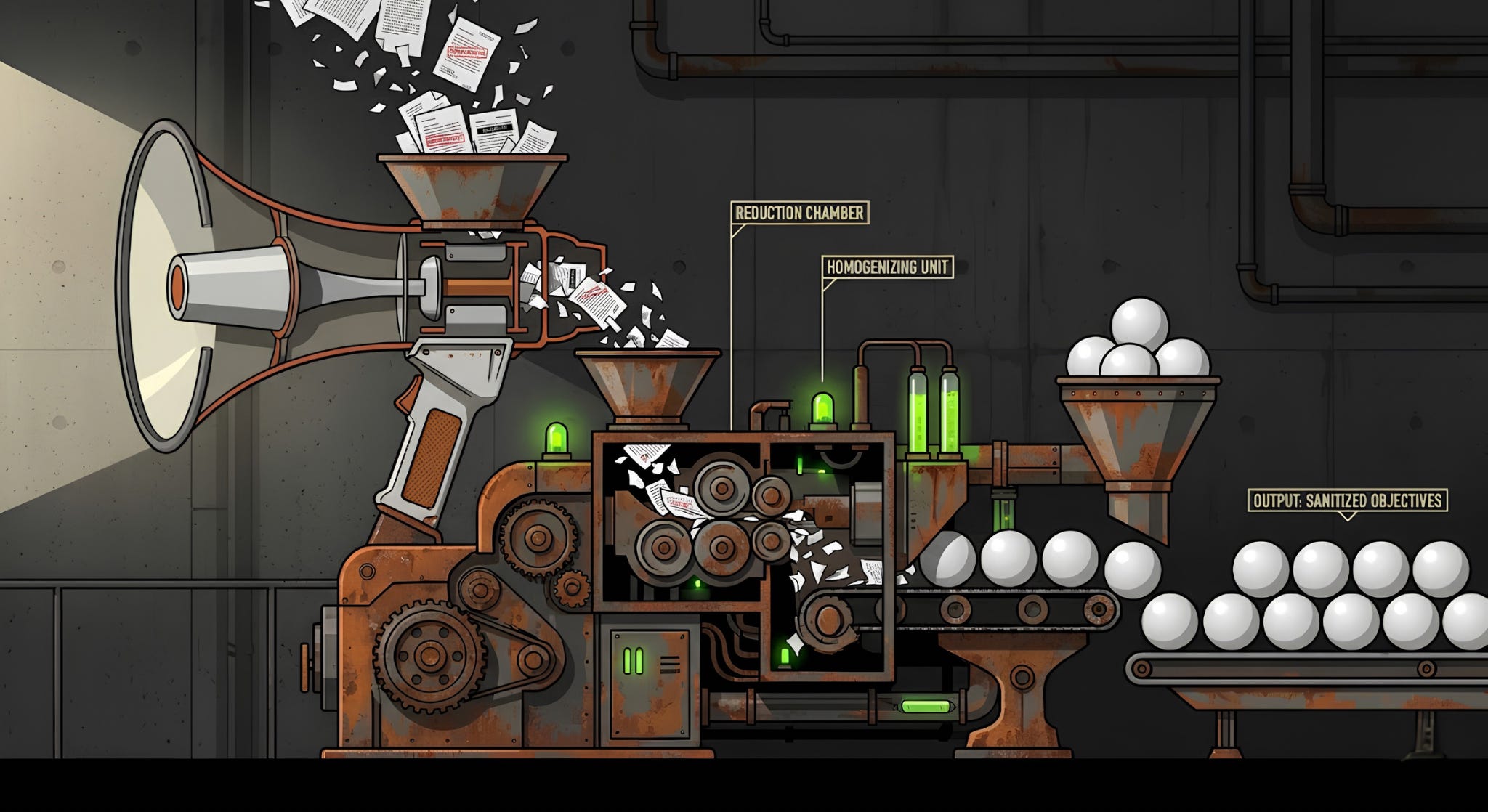
5. 2024–2026: The New Frontiers of Vetting and Finance
By the mid-2020s, ministerial veracity became entangled with the management of market-sensitive data and the vetting of high-level appointments. In the 2024 election, Rishi Sunak’s assertion of a “£2,000 tax rise” under Labour was criticized by fact-checkers for relying on “uncertain” costings and “questionable assumptions” [18].
The Keir Starmer era was defined by controversies regarding Peter Mandelson’s appointment. Reports in 2026 synthesized evidence that Mandelson had leaked market-sensitive documents—including asset sale plans and tax policy—to Jeffrey Epstein. On 13 June 2009, Mandelson allegedly transmitted a high-level Downing Street document proposing £20bn of asset sales and revealing tax policy plans [17]. Further evidence from December 2009 suggested Mandelson coordinated with JPMorgan Chase to “mildly threaten” Chancellor Alistair Darling over a proposed bank bonus tax [17]. On 31 March 2010, Mandelson reportedly forwarded confidential minutes of a meeting between Darling and Larry Summers to Epstein just five minutes after receiving them [18].
When these details emerged, Starmer stated he had been “misled and betrayed” during the vetting process [18], [19]. This led to reports in 2026 of a “systemic failure” in the vetting of senior government figures. Proposed reforms include:
• The creation of an independent anti-corruption commission with statutory powers [18].
• The implementation of US-style public confirmation hearings for senior appointments to reduce information asymmetry [19].
6. Conclusion: The Mechanisms of Accountability
The evolution of ministerial veracity from 1970 to 2026 reflects a transition from simple secrecy to the sophisticated management of “typical” data and intelligence caveats. While independent inquiries—such as Scott, Butler, and Chilcot—have played a role in rectifying the historical record, they often operate years after the impact of a misleading statement has been felt. The rise of fact-checking organizations and calls for statutory vetting reforms suggest a recognition that the traditional “honor system” of the Despatch Box is no longer sufficient to ensure parliamentary accountability.
7. Source Material
1. Paul Vallely, “Scott Report: The Essential Guide,” The Independent, 15 Feb 1996.
2. The Scott Report, D 4.51.
3. The Scott Report, D 4.6.
4. The Scott Report, D 4.62.
5. The Right Honourable Sir Richard Scott, “Report of the Inquiry into the Export of Defence Equipment and Dual-Use Goods to Iraq and Related Prosecutions,” Volume IV, Section H1.21.
6. Major General Michael Laurie, Testimony to the Iraq Inquiry, 2011.
7. Chris Ames, “Memo reveals intelligence chief’s bid to fuel fears of Iraqi WMDs,” The Observer, 26 June 2011.
8. Hannah Smith, “Liz Truss wrong to claim ‘no household’ will pay more than £2,500 on energy bills,” Full Fact, 26 Sept 2022.
9. Foreign Affairs Select Committee, “The September Dossier,” 7 July 2003.
10. Butler Review, “Review of Intelligence on Weapons of Mass Destruction – Report.”
11. Fray Peter, “Spy chief regrets ‘45-minute’ Iraq weapons claim,” The Age, 17 Sept 2003.
12. Full Fact, “Fact check: BBC head-to-head debate and Conservative video clip,” 27 June 2024.
13. Patrick Wintour and Denis Campbell, “Cameron should apologise for NHS reforms, says Miliband,” The Guardian, 6 Feb 2015.
14. “Peter Mandelson leaked sensitive UK government tax plans to Jeffrey Epstein,” Financial Times, 2 Feb 2026.
15. “Newscast - Epstein Files: The Gordon Brown Intervention,” BBC Sounds, Feb 2026.
16. “Mandelson leaked No 10 documents to Epstein,” Tax Policy Associates, 2 Feb 2026.
17. “Newscast - Epstein Files,” BBC Sounds, Feb 2026.
18. Peter Walker and Kiran Stacey, “Gordon Brown ‘deeply regrets’ bringing Peter Mandelson into his government,” The Guardian, 6 Feb 2026.
19. Gordon Rayner, “Gordon Brown’s mistake on Mandelson has blown up in Starmer’s face,” The Daily Telegraph, 2 Feb 2026.
Lyrics:
I was born in nineteen-seventy.
That is fifty-six years of breath.
Fifty-six years of polished wood podiums.
Fifty-six years of men and women clearing their throats before the cameras.
Let’s open the archive. Let’s look at the ink.
Nineteen-eighty-two. The Atlantic is freezing.
Three hundred and twenty-three sailors drown in the dark.
The ship was sailing away.
The private papers whisper about offshore oil. The public papers shout about glory.
The headline says Gotcha. The microphone does not flinch.
They hand us the rules. They do not read them.
We carry the consequence. They carry on.
Nineteen-ninety-two. The machine tools ship out to the desert.
Dual-use. A quiet stamp of approval in a closed room.
Then the gavel falls on the citizens who shipped them, while the cabinet hides the memos.
Half the picture. Half the truth. The report is redacted.
The microphone does not flinch.
Two-thousand-and-three.
Forty-five minutes.
That is how long it takes to boil a pot, to walk to the station, to justify a slaughter.
A dossier built of air and sexed-up syllables.
The private letter to Texas says, I will be with you, whatever.
The public statement says, imminent threat.
The microphone does not flinch.
We are bleeding cash. We are locking our doors.
Two-thousand-and-twenty.
The public dies alone in hospital beds behind glass.
The private office pours wine in the garden.
Two-thousand-and-twenty-two.
No household will pay more. A cap made of paper. A winter made of ice.
Two-thousand-and-twenty-six.
Inadvertent. A black hole. I was misled by my advisors.
They hand us the rules. They do not read them.
We carry the consequence. They carry the briefcase.
I’ve been reading the Hansard transcripts. Staring at the gap.
The exact, measurable distance between the intelligence assessment and the evening news.
Between the sacrifice demanded of the public, and the absolute impunity of the parlor.
It is uncomfortable to look at the ledger for this long.
To realize that the mechanism of deception is not a malfunction.
It isn’t broken.
It is working exactly as designed.